Understanding Stroke: What You Need to Know
June 3, 2025

June is Stroke Awareness Month, a vital time to shed light on one of the leading causes of disability and death worldwide. A stroke occurs when blood flow to a part of the brain is interrupted or reduced, preventing brain tissue from getting the oxygen and nutrients it needs. In just minutes, brain cells begin to die, making every second critical.
In this post, we’ll explore what a stroke is, how to spot the signs quickly, and what you can do to lower your risk. Let’s work together to spread knowledge and save lives.
A stroke happens when the blood flow to your brain is suddenly interrupted. This can be due to a clot blocking a blood vessel or a vessel bursting. When this happens, the brain doesn't get the oxygen and nutrients it needs, and brain cells can become damaged or even die.
Types of Stroke:
There are a few different kinds of strokes:
Ischemic stroke – This is the most common type. It happens when a clot blocks the blood flow to your brain.
Hemorrhagic stroke – This occurs when a blood vessel in the brain breaks, causing bleeding and stopping normal blood flow.
Transient Ischemic Attack (TIA) – Sometimes called a “mini-stroke,” this type is temporary. A small clot blocks the blood flow briefly, but it usually clears up on its own. Symptoms may last only a few minutes.
Signs and Symptoms to Watch For:
Stroke symptoms can vary, depending on the part of the brain affected. Here are some of the most common signs to be aware of:
- Sudden trouble speaking or understanding speech
- Blurred vision or trouble seeing clearly
- Feeling confused, agitated, or "not yourself"
- Dizziness or a spinning sensation
- A sudden, severe headache
- Drooping or numbness on one side of your face
- Loss of balance or clumsiness
- Difficulty remembering things
- Mood changes or unusual behavior
- Nausea or vomiting
- Stiffness in your neck
- Fainting or passing out
- Seizures
- Slurred or jumbled speech
- Sudden loss of one or more senses – like vision, hearing, smell, taste, or touch
- Weakness or paralysis on one side of your face or body
If you or someone you know experiences any of these symptoms, don’t wait, call emergency services right away. Quick action can save lives and make a big difference in recovery.
Who’s at Risk for a Stroke?
While a stroke can happen to anyone, some people are more at risk than others. Understanding these risk factors can help you take steps to protect your health.
You may be at higher risk if you:
- Are over the age of 65
- Smoke or use tobacco (this includes vaping)
- Use recreational or nonprescription drugs
Certain health conditions can also raise your risk:
- High blood pressure (also called hypertension)
- High cholesterol
- Type 2 diabetes
- Metabolic syndrome
- Drinking a lot of alcohol
- Frequent migraine headaches
If you have any of these risk factors, it’s a good idea to talk with your doctor about ways to stay healthy and reduce your chances of having a stroke.
How to Recognize a Stroke: Think F.A.S.T.
The sooner a stroke is recognized, the faster you can get help, and that can make a big difference in recovery. A quick way to remember the signs of a stroke is with the word F.A.S.T.:
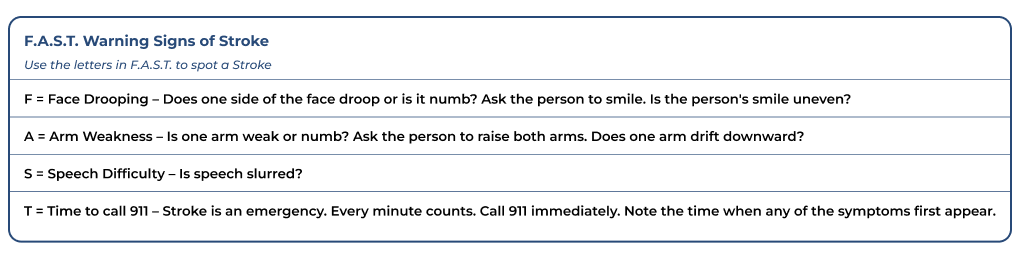
If you recognize somebody is experiencing a stroke, the best thing to do, is call 911 to get medical attention as soon as possible.
How to prevent a stroke?:
The Canadian Guidelines suggest a prevention checklist to reduce the risk of suffering a stroke.
Healthy Eating
- Eat more fruits, vegetables, and whole grains
- Limit salt, sugar, and saturated fats
- Drink plenty of water daily
Stay Active
- Be physically active 30–60 minutes most days (walking, swimming, gardening)
- Talk to your doctor before starting new exercise if needed
Maintain a Healthy Weight
- Keep a healthy waist size (under 88 cm for women, 102 cm for men)
- Monitor your weight regularly
Avoid Tobacco
- Quit smoking or vaping
- Use support programs or talk to your doctor for help
Limit Alcohol
- Drink within recommended limits (Men: max 14 drinks/week, Women: max 9)
- Have alcohol-free days during the week
Manage Health Conditions
- Keep blood pressure below 140/90 mmHg
- Monitor cholesterol and blood sugar levels
- Manage diabetes and metabolic syndrome
Watch Your Heart
- Get checked for irregular heartbeat (atrial fibrillation)
- Take medications as prescribed
Reduce Stress
- Practice relaxation (deep breathing, yoga, or meditation)
- Do things you enjoy every day
Take Medications as Advised
- Follow the doctor’s advice on medications like aspirin or statins
- Never stop or change medications without talking to your doctor
Understanding stroke doesn’t have to be overwhelming. By learning the signs, managing your risk factors, and staying in touch with your doctor, you can take powerful steps toward protecting your health. Remember, acting fast in the case of a stroke can save a life, maybe even your own. Share this information with friends or family, and let’s keep each other safe and informed.
\ **The content on this site, regardless of its date, is not intended to replace direct medical advice from your doctor or another qualified healthcare professional**
\ Salyx